-
Nakashima Mika – 눈의 꽃 (雪の華)
-
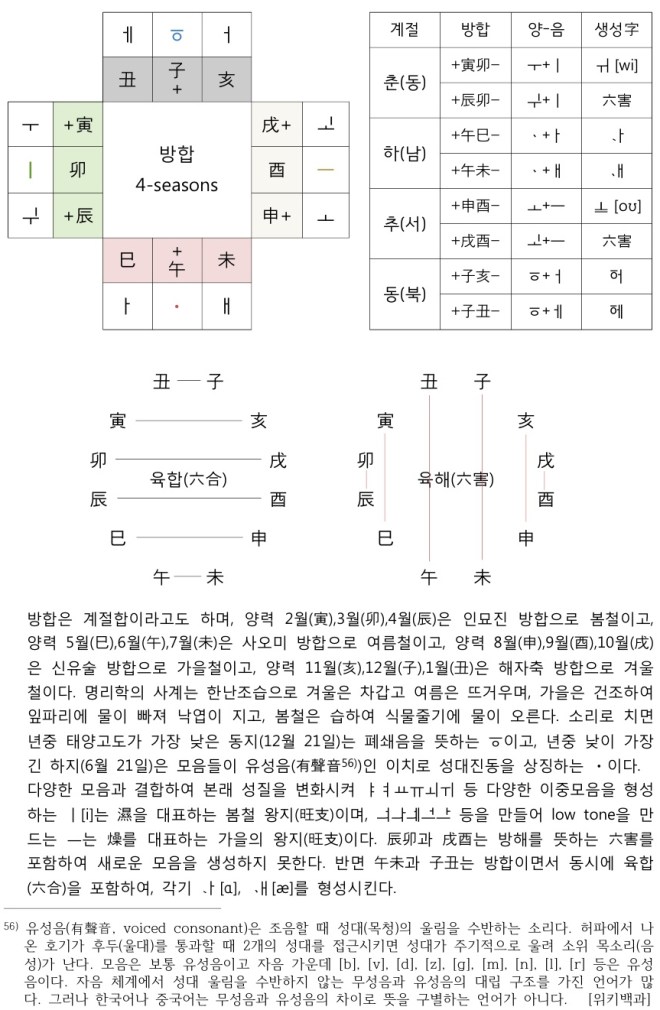
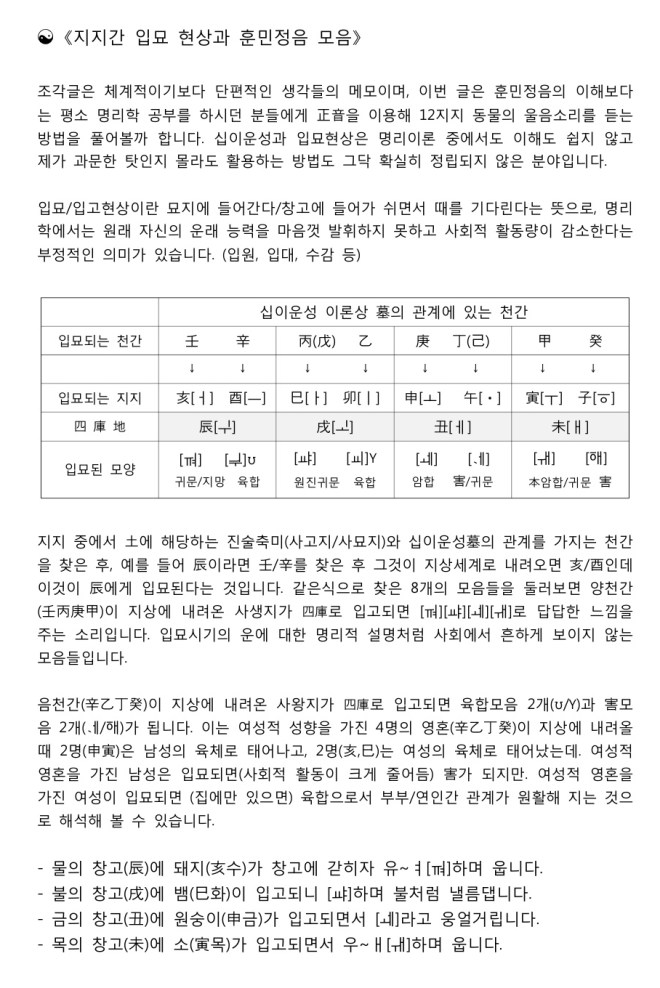
☯ 지지(地支) 육합은 무엇인가?


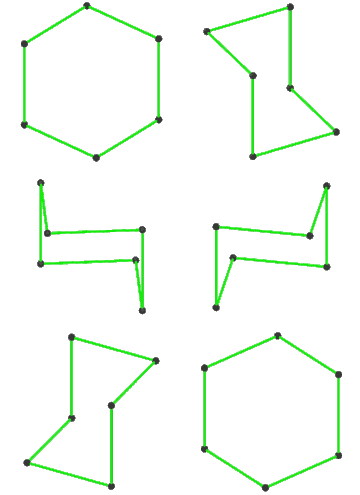
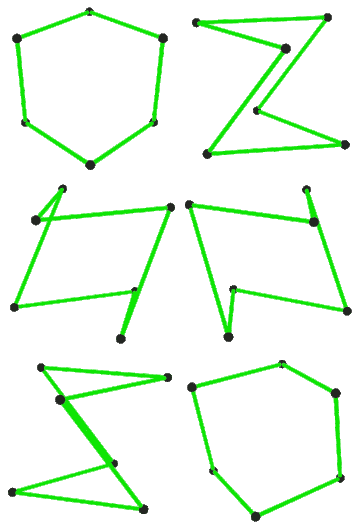



-
I. 12율려 (陽律陰呂在位圖說)
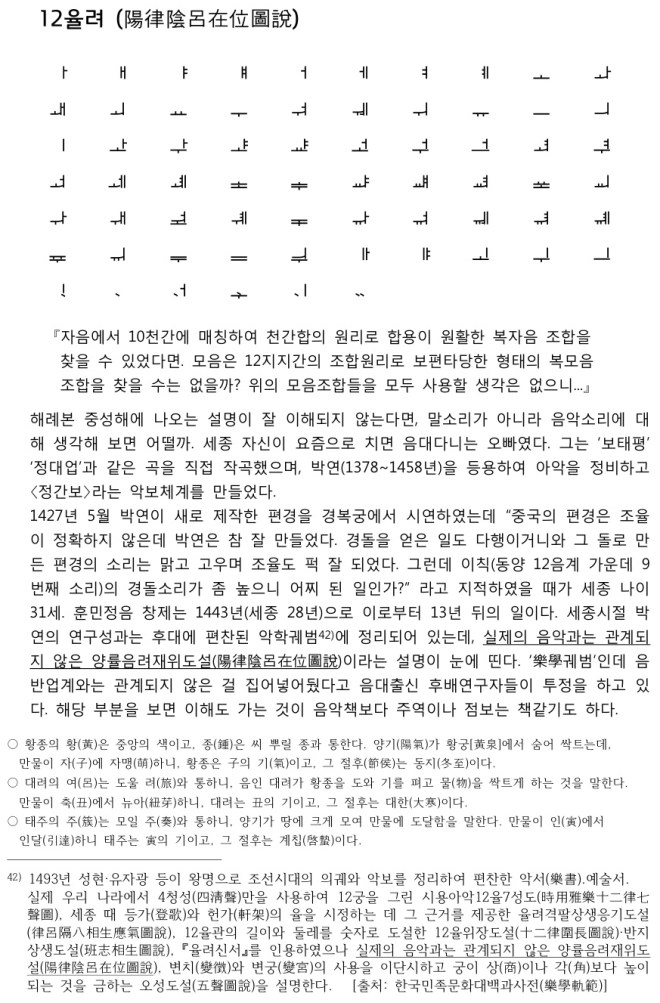


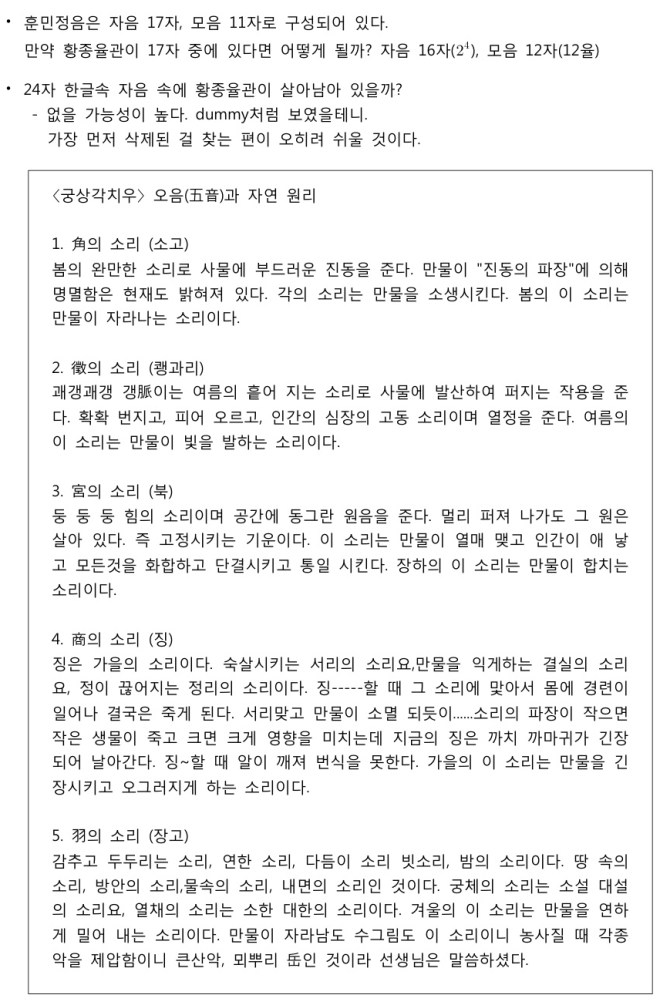
인류음악의 발전사는 5음계 7음계를 거쳐 12음계에서 완성에 가까워진다.
12음 사이의 간격을 평균율로 바꾼 것이 현재 사용되는 표준이다.
가장 길이가 긴 황종율관으로부터 피타고리안 튜닝으로 나머지 11개음을
찾는 방식은 위의 링크를 클릭하면 자세한 물리적 과정을 알 수 있다.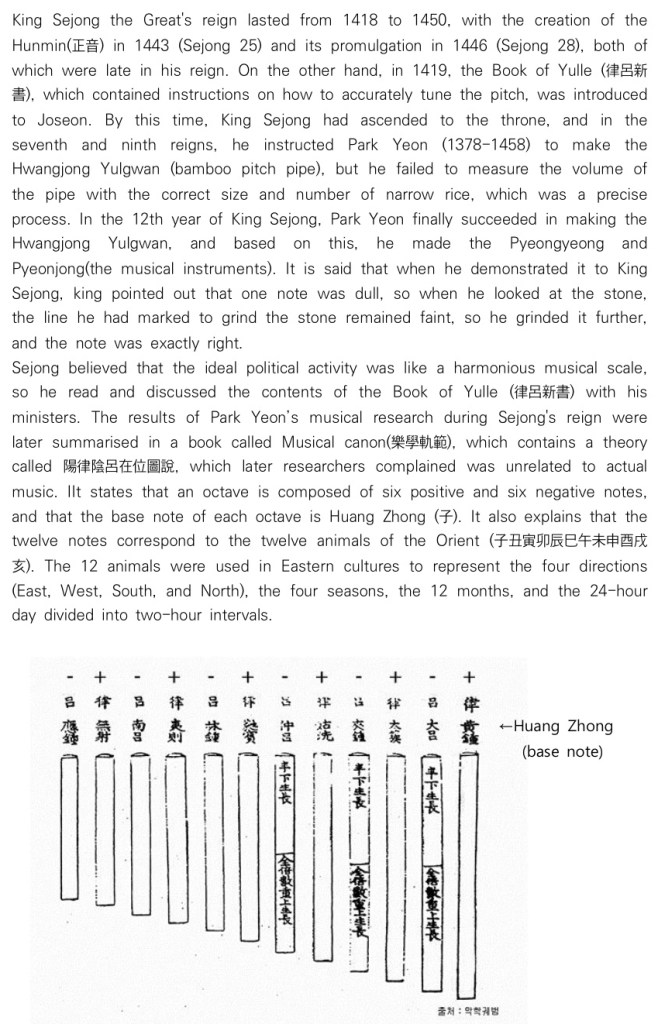

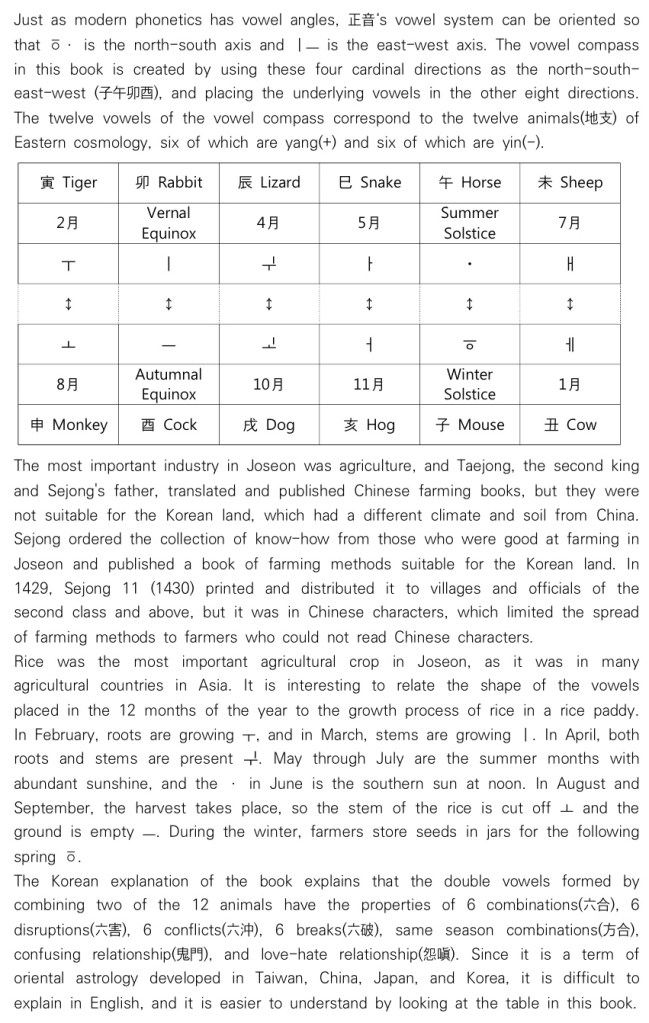
-
II. 모음사각도 Day1, 2, 3


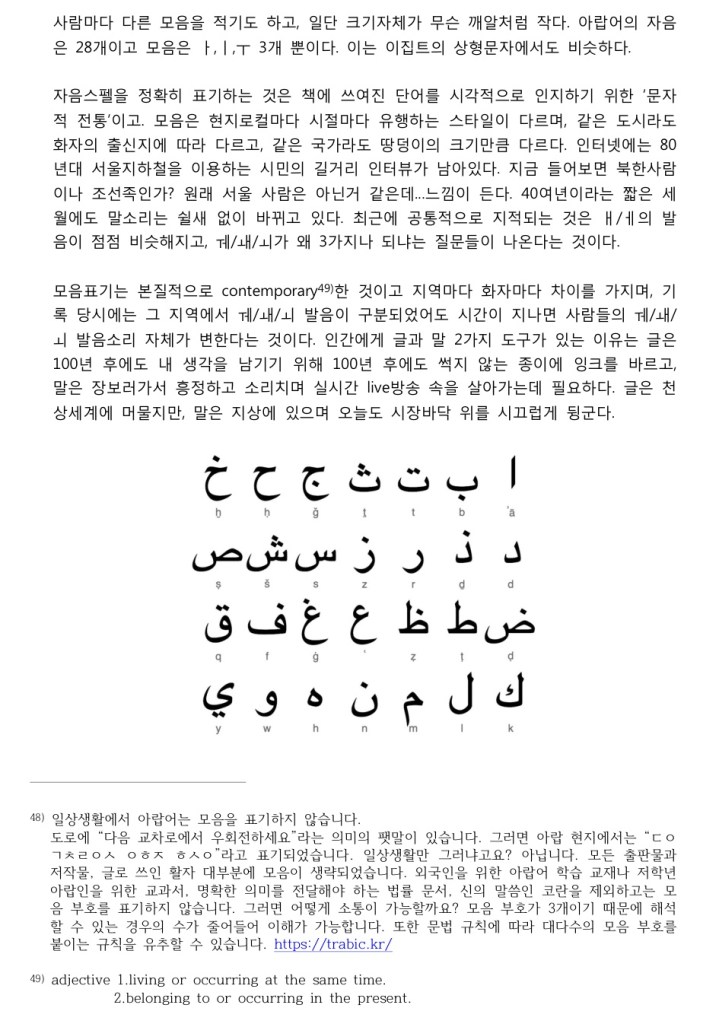

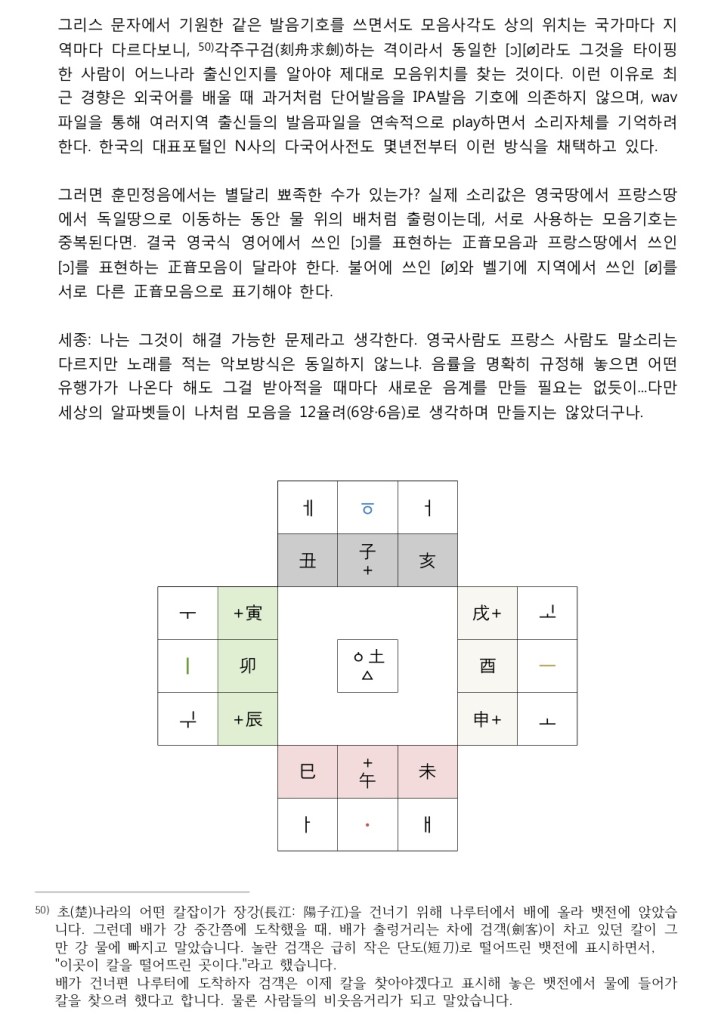


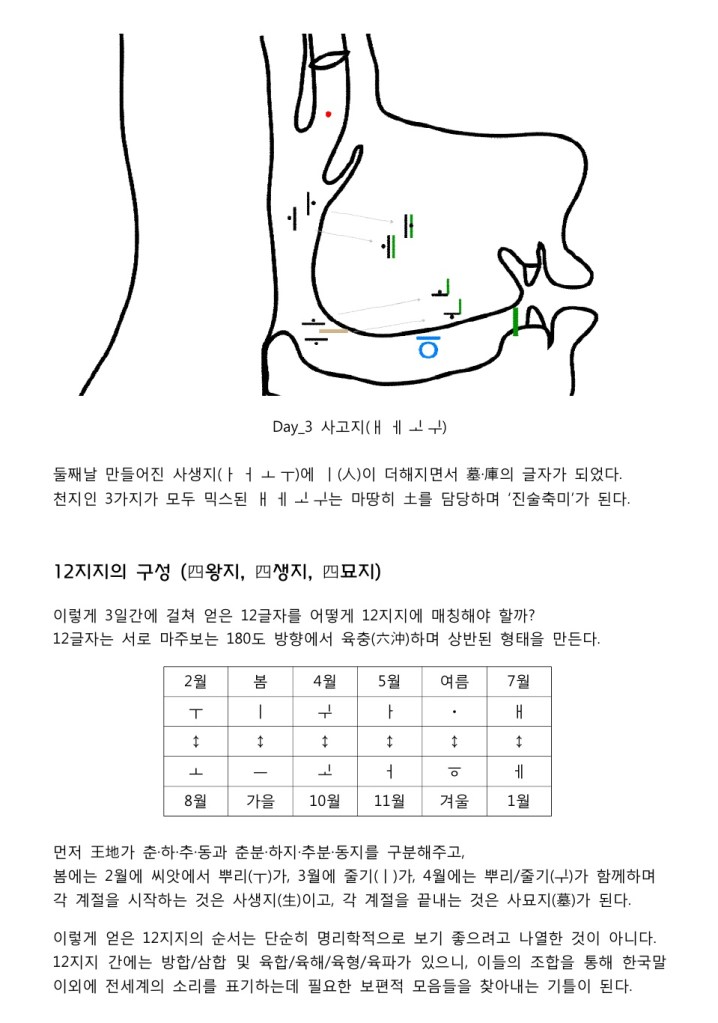
-
III. 方合 三合 六合 6해 6충 6파

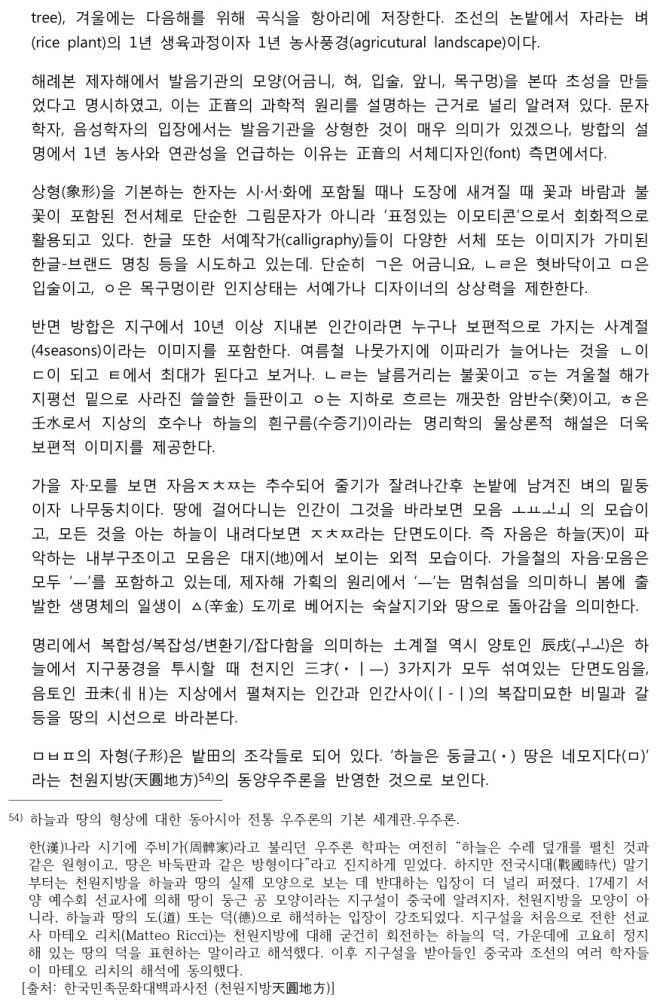


-
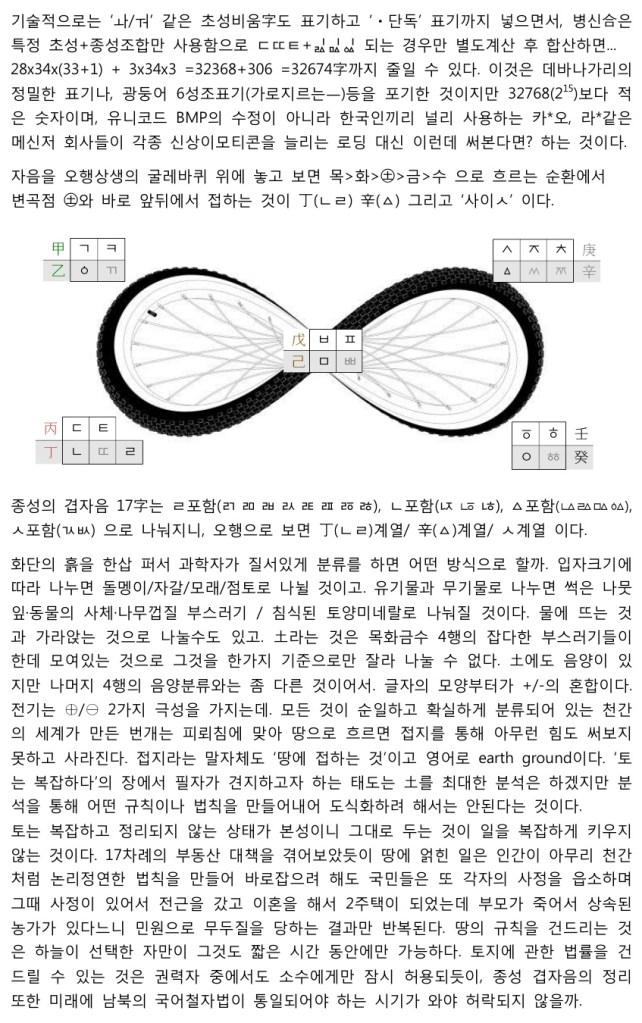
21세기 훈민정음의 미래




-
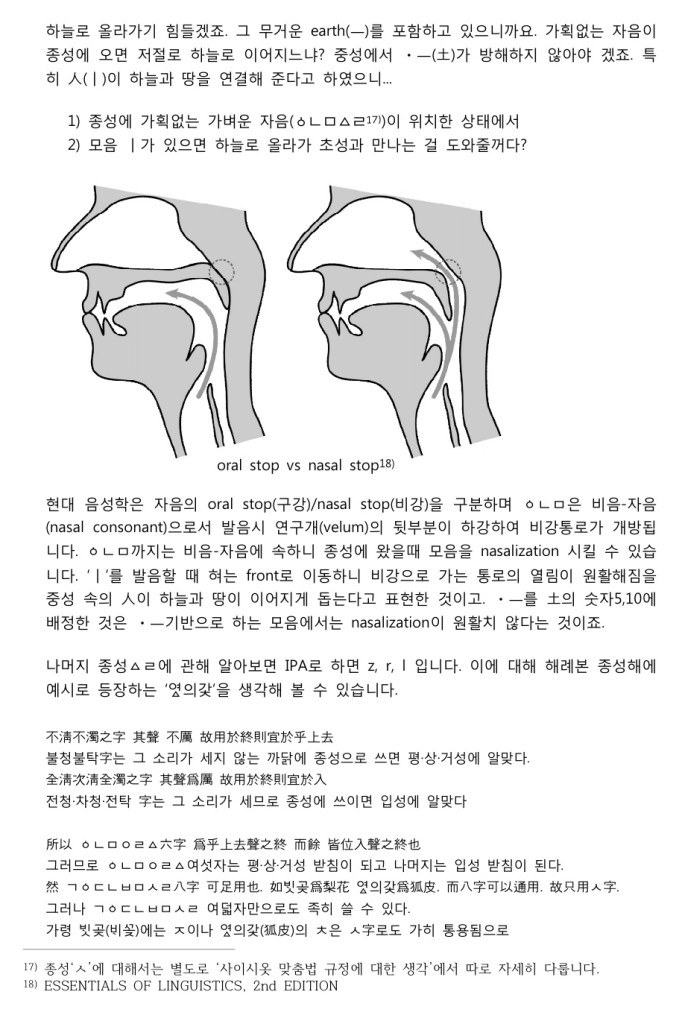
☯ 체(體)·용(用)의 분리사용이란?




-
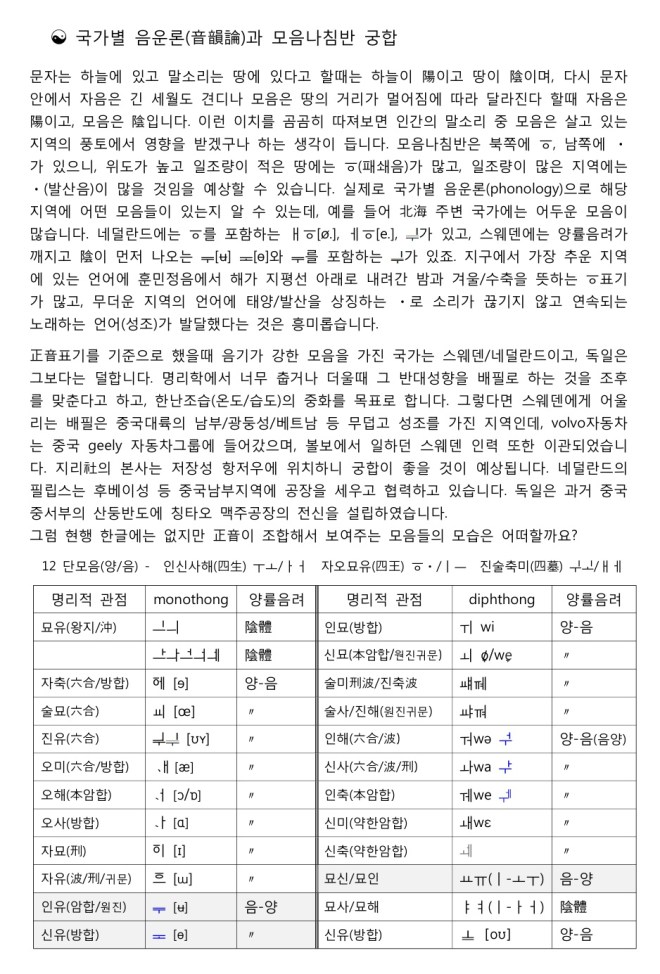
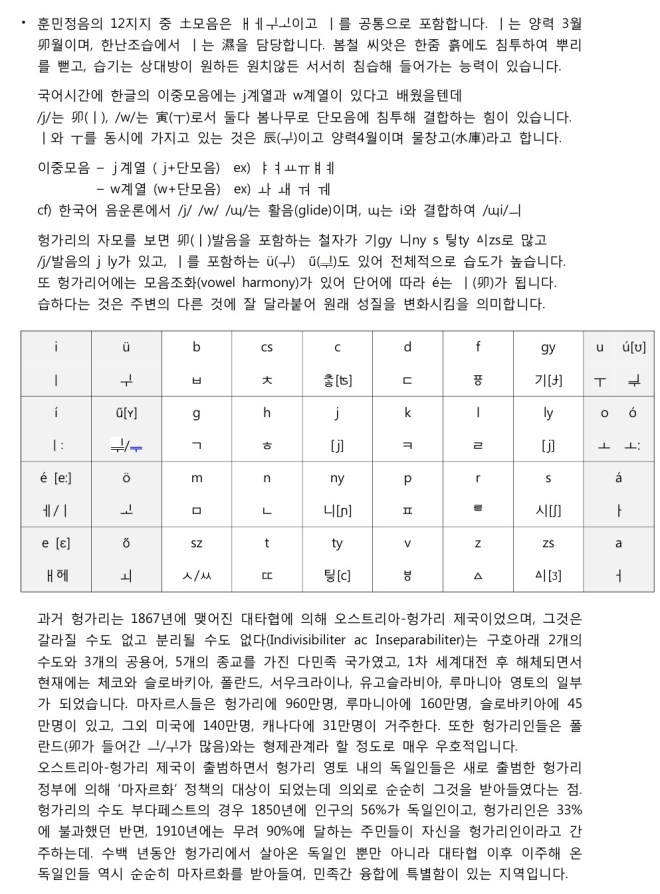
☯ 국가별 음운론(音韻論)과 모음나침반 궁합

-
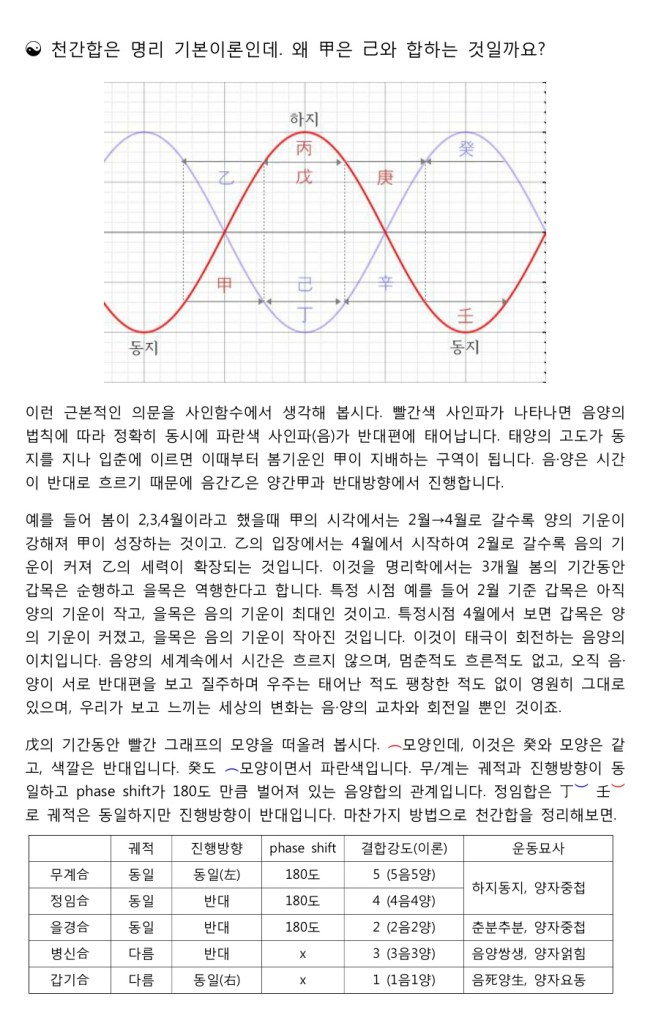
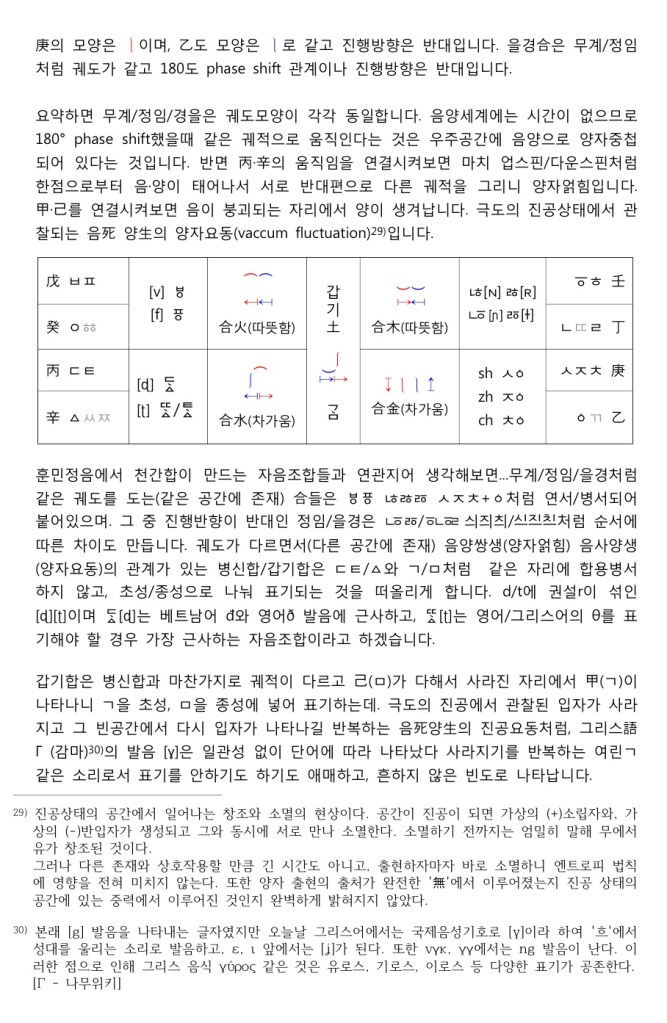
☯ 천간합은 명리 기본이론인데. 왜 甲은 己와 합하는 것일까요?
-
Preface and how to read this book
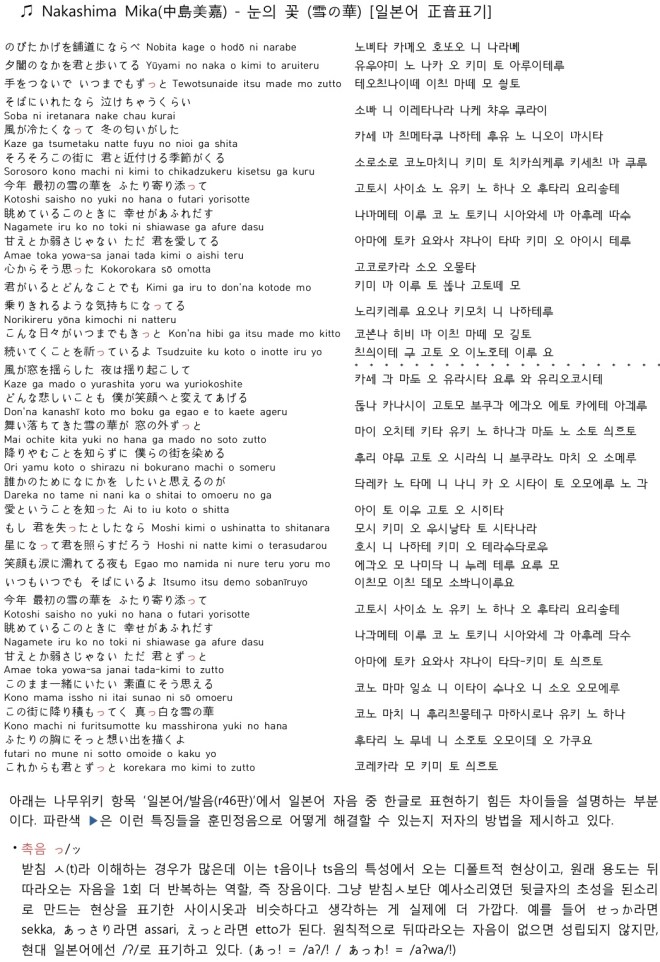
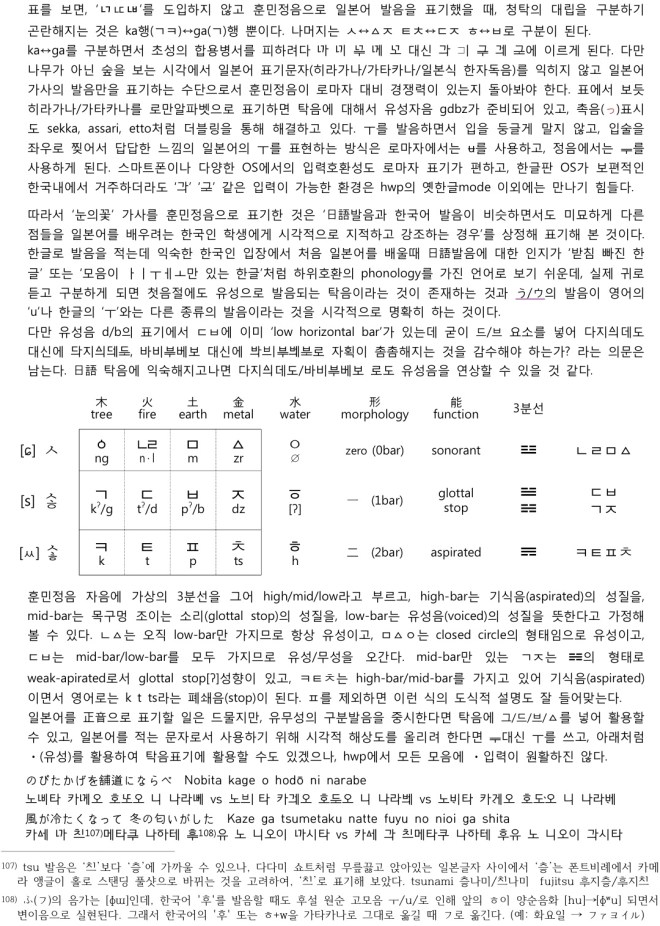
In this book, we’ll be discussing HUNMIN(正音) in two main categories. The first is how to use 正音 to represent various foreign language pronunciations. It has been said that it can represent the sound of the wind, the cry of a crane, the clucking of a rooster, and the barking of a dog, but few people actually use it that way. We are never taught which of the many combinations of ligatures is used for which pronunciation. What I propose is to keep the current practice of using the 24 characters of Hangul pronunciation and the use of ㄲㄸㅃㅉ for fortis(hard sound), but to use a combination of ㆁㅿㆆㆍ and other consonants to represent foreign languages by locating them in the IPA (International Phonetic Alphabet) consonant table. Designing new characters was rejected because the 28 sine qua non characters were perfect on their own. Hangeul, as its name implies, is heavily weighted toward its use as a writing system, and is used by Koreans to publish books and write official documents. The orthography, which is necessary for such purposes, should also be respected. The use of 正音 is not for writing, but to be used by Koreans in unfamiliar countries as an easy way to write down the pronunciation of essential conversations, business sentences, and song lyrics in a Korean word processor. The second is to explore and understand the internal structure of the Hunmin(正音) itself. In the Haeryebon (a user’s guide to the Hunmin(正音) created by Sejong), the consonants correspond to the five elements (tree, fire, earth, stone, and water), and the vowels are explained as the harmony of the heaven, man, and earth. The combination of initial, middle, and final sounds is also explained as the work of the greater heaven, man, and earth. In this book, we have sought a deeper understanding of the 28 consonants distributed according to the theory of mythology, which also enhances our understanding of Hangul.
Hunmin(正音,correct sound) 28 letters = Hangul(Korean letters) 24 letters + ㆁㅿㆆㆍ
The order of the book is consonant structure ≫ vowel structure ≫ Hunmin(正音) in IPA tables. The key points are organized in a table, so if you want to learn quickly, you can focus on the table and read the text only when you don’t understand it. If you familiarize yourself with the contents of the table and listen to the pronunciation and transliteration of the music video in the middle, you will eventually get used to listening and writing with Hunmin(正音). If you are a Korean speaker, you are already familiar with all but four of the 28 letters, and I am merely guiding you through the logic of the Yin Yang and Five Elements in terms of how to use the remaining four letters(ㆁㅿㆆㆍ) and vowel combinations. Once you have gotten used to listening and writing with Hunmin(正音), I recommend that you try the French and Cantonese songs in the middle of the book, “Earth(土) is Complicated I & II”.


-
구독
구독함
이미 WordPress.com 계정을 가지고 계신가요? 바로 로그인하세요.
 正音 훈민정음 Orthophon